
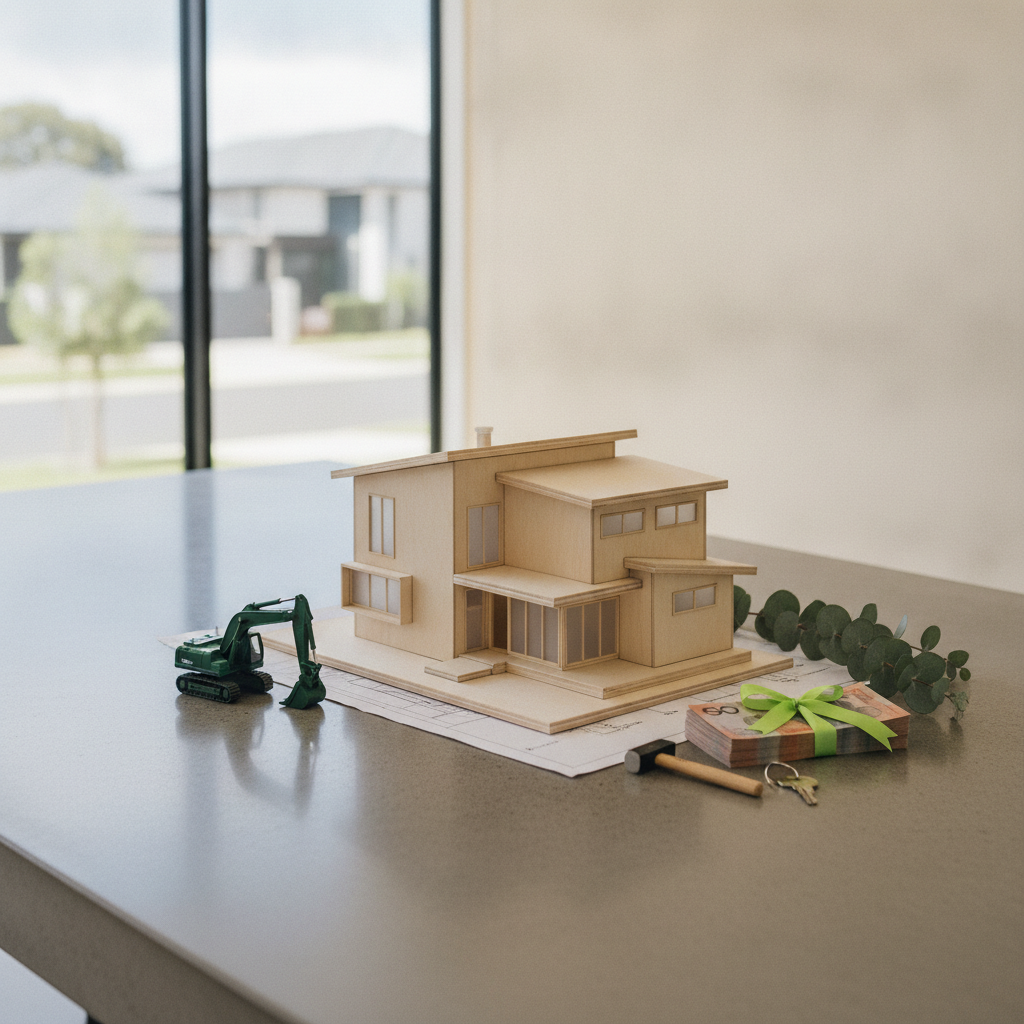
Love your location but not your home?
For many homeowners, a knockdown rebuild can provide the best of both worlds — allowing you to stay in the suburb, street or community you already love while replacing an existing property with a brand-new home designed around your family and future.
But financing a knockdown rebuild can look quite different from purchasing an established home or completing a standard construction project.
SW Brokerage helps clients understand the finance side of a knockdown rebuild from the outset, including borrowing capacity, cash flow and lender requirements.
Why Is Knockdown Rebuild Finance Different?
One of the biggest considerations is that the value of your property changes throughout the project.
You begin with an existing home and land, move through a period where the dwelling has been demolished and you effectively hold vacant land, and eventually arrive at a completed new home.
For example, a property could move through indicative values such as:
Existing dwelling: $1.5 million Vacant land after demolition: $1.2 million Completed new home: $2 million
These figures are illustrative only, but they highlight an important point: the lender needs to consider the project at different stages, not simply what the finished home may eventually be worth.
This is why understanding your borrowing position before demolition begins is so important.
Can I Borrow the Demolition Costs?
Demolition is one area that can catch homeowners by surprise.
Lenders will typically not fund demolition costs as part of the construction facility, meaning you may need to have the funds available to cover these costs upfront.
The lending strategy can vary depending on your equity, existing mortgage, construction costs and overall financial position, so it’s worth understanding how demolition will be funded before signing contracts or commencing work.
What Happens to My Equity Once the House Is Demolished?
This is another important question.
You might have substantial equity while your existing home is standing, but once it is demolished, the lender is assessing a vacant block of land.
That can change the property's value and, in turn, its Loan-to-Value Ratio (LVR).
Before progressing, your broker can help you understand how the lender may view the property throughout the project and whether you have sufficient equity and borrowing capacity for the proposed build.
Construction Finance Isn't Paid All at Once
Construction loans generally operate differently from a standard home loan.
Rather than receiving the entire construction amount upfront, funds are usually released progressively as your builder completes agreed stages of the build.
Depending on the lender and facility, repayments during construction are commonly interest-only on the amount drawn, with some lenders also offering principal-and-interest options.
Understanding how these progressive payments work can help you plan your cash flow throughout construction.
Don't Forget the Costs Outside Your Building Contract
Your building contract may not represent the complete cost of creating your finished home.
Depending on your project, there could be additional works such as:
→ Demolition → Driveways → Landscaping → Fencing → Retaining walls → External works or upgrades
Where items sit outside the main building contract, separate quotes or invoices may need to be provided to the valuer so they can be considered as part of the overall project.
Knowing your complete project cost early can help avoid unexpected funding gaps later.
Choosing the Right Builder and Lender Matters
Not every lender approaches knockdown rebuilds in exactly the same way.
Some lenders have specific policies and greater experience with this type of construction finance, while others may assess the project differently.
The builder matters too. Financing an owner-builder project can be significantly more challenging, whereas working with an established, licensed builder can make the lending process more straightforward.
That's where having the right team around you becomes particularly valuable.
More Than Just Getting the Loan Approved
For us, knockdown rebuild finance isn't simply about obtaining an approval.
We look at your cash flow and overall financial position to help ensure the lending structure is appropriate for your circumstances and the project you're planning.
As a brokerage with access to more than 60 lenders, we're also able to consider a broader range of lending options rather than being restricted to a single bank.
Planning a Knockdown Rebuild? Start With Finance Early.
Ideally, the finance conversation should happen before you demolish your existing home.
Understanding your equity, borrowing capacity, demolition costs, construction budget and lender requirements early can give you greater confidence as you begin making decisions with your builder.
If you're weighing up whether to renovate, relocate or knock down and rebuild, SW Brokerage can help you understand the numbers before you take the next step.
Love Your Location, But Ready for a New Home?
Speak with the SW Brokerage team about financing your knockdown rebuild and find out what your options could look like before you start.
This information is general in nature and does not take into account your individual objectives, financial situation or needs. Lending criteria, valuations, LVR requirements and construction lending policies vary between lenders and are subject to change. Consider your individual circumstances and seek appropriate professional advice before making financial decisions.
Ready to talk to a broker?
Get tailored finance and lending advice from the SW Brokerage team.


